
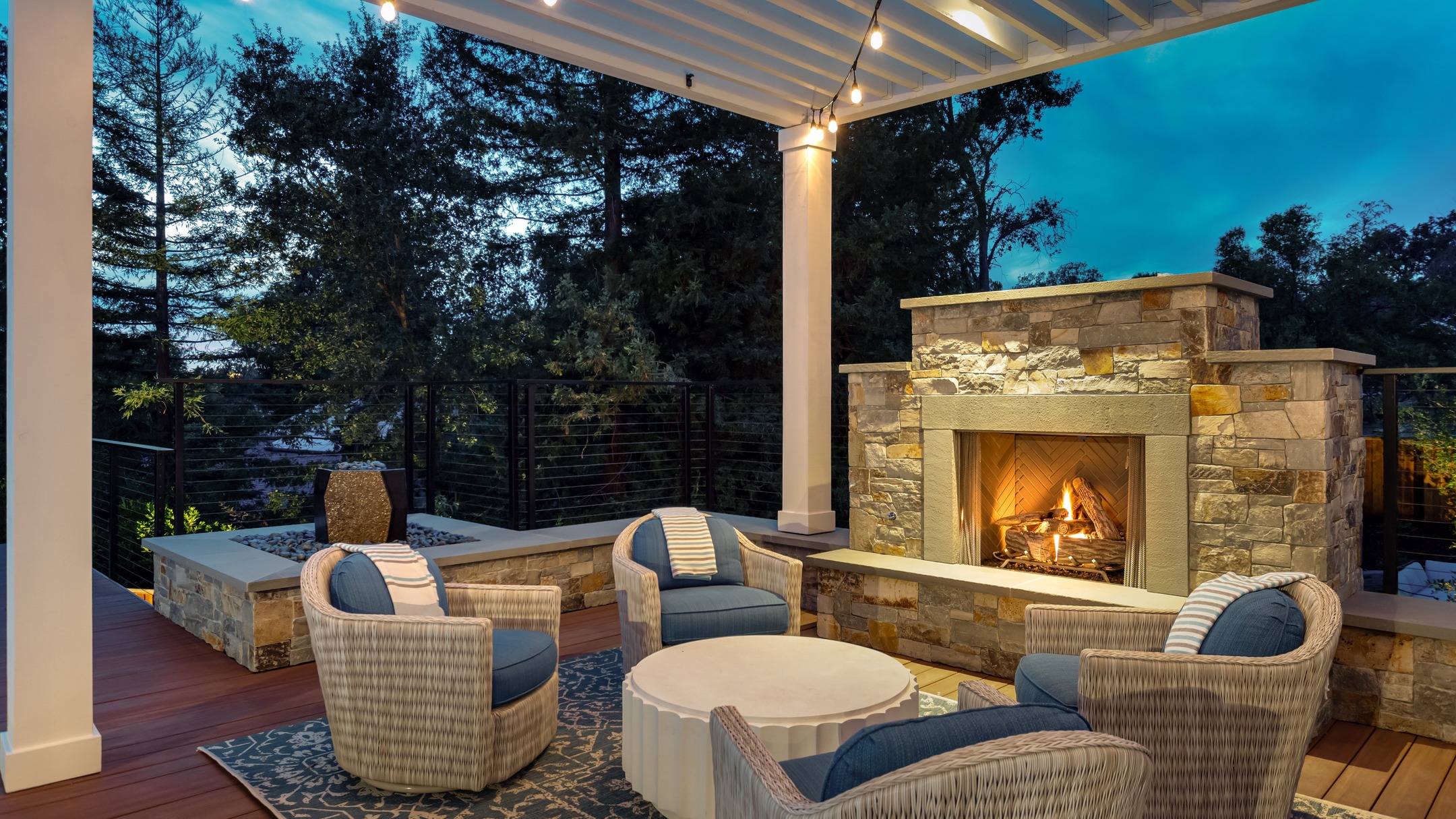
When most homeowners think about quality in a backyard project, they picture what they can see.
Clean lines. Straight boards. Nice finishes.
And those things do matter.
But in outdoor living construction—decks, patio covers, outdoor kitchens—the most important details are often the ones you’ll never see at all.
And that’s where problems tend to start.
Because by the time those issues show up…
👉 it’s usually too late to fix them easily.
What “Quality” Really Means (Beyond the Surface)
There are really two types of quality in a project.
The first is visible.
That’s what you notice right away—the look, the materials, the overall finish.
The second is structural.
That’s everything happening underneath and behind the scenes—how the structure is supported, how materials connect, how water is managed, and how everything holds up over time.
Two backyard projects can look almost identical when they’re finished…
But perform very differently a few years later.
The Decisions That Never Make It Into Photos
Some of the most important decisions in outdoor living construction happen early—and quietly.
They’re not about appearance.
They’re about performance.
Things like:
- how water moves through and around the structure
- how framing is connected and supported
- how materials expand and contract outdoors
- how components are layered and sequenced
These are the details that don’t stand out when the project is done…
But they’re exactly what determine whether the space holds up over time.
Where Problems Usually Come From
We’ve seen this pattern play out many times.
A project looks great when it’s finished.
Everything feels solid.
And then over time…
- small movement starts to show
- water finds its way where it shouldn’t
- materials begin to wear faster than expected
Not because the builder didn’t care…
But because certain decisions weren’t fully thought through early on.
And in outdoor environments—where everything is exposed to weather, moisture, and temperature—those early decisions matter even more.
Why Experience Makes the Difference
Experience isn’t just about knowing how to build.
It’s about knowing where things tend to fail.
Over time, you start to recognize:
- which details are most vulnerable
- where shortcuts show up later
- how materials actually behave outside—not just in theory
That changes how decisions are made long before construction begins.
It leads to building with more foresight, not just following a plan.
Code Is the Minimum—Not the Goal
Building code is important.
But it’s a baseline.
Not a guarantee of long-term performance.
In many outdoor living projects, doing the minimum can still lead to issues over time.
That’s why experienced builders often make decisions that go beyond code—adding strength, improving drainage, or allowing for real-world movement and conditions.
These aren’t flashy upgrades.
But they’re the kinds of decisions that prevent problems later.
The Hidden Cost of “Looks Good Right Now”
One of the biggest risks in construction is focusing only on what’s visible.
Because problems tied to structure and performance don’t show up immediately.
They show up later—after the project is finished and in use.
And by that point, they’re harder—and more expensive—to correct.
The Bottom Line
Quality isn’t just about how something looks when it’s finished.
It’s about the thinking behind the parts no one sees.
In outdoor living construction, those decisions are what determine whether your space holds up for years—or starts to show problems sooner than expected.
Before You Start Your Project
If you’re planning a deck, patio cover, or outdoor living space, one of the most valuable questions you can ask isn’t just about materials or finishes.
It’s:
👉 “How are the parts I can’t see being handled?”
Because that’s what defines true quality.
Download the Outdoor Living Planning Checklist
If you want to better understand what goes into a well-built outdoor living project, we’ve put together a simple checklist to help guide you.
It highlights the areas most homeowners don’t think about—but should.